
Thrive Fertilizing Formerly
Kingwood Fertilizing
Home / Blog / Core Aeration vs. Liquid Aeration: Why We Don’t Punch Holes in Your Houston Lawn
Lawn Diagnosis Published · 6 min read By the Thrive Fertilizing Team

Core Aeration vs. Liquid Aeration: Why We Don’t Punch Holes in Your Houston Lawn

Core aeration leaves mud plugs, reaches only part of your lawn and risks sprinkler damage. See why Thrive includes liquid aeration in every liquid application for Houston clay.

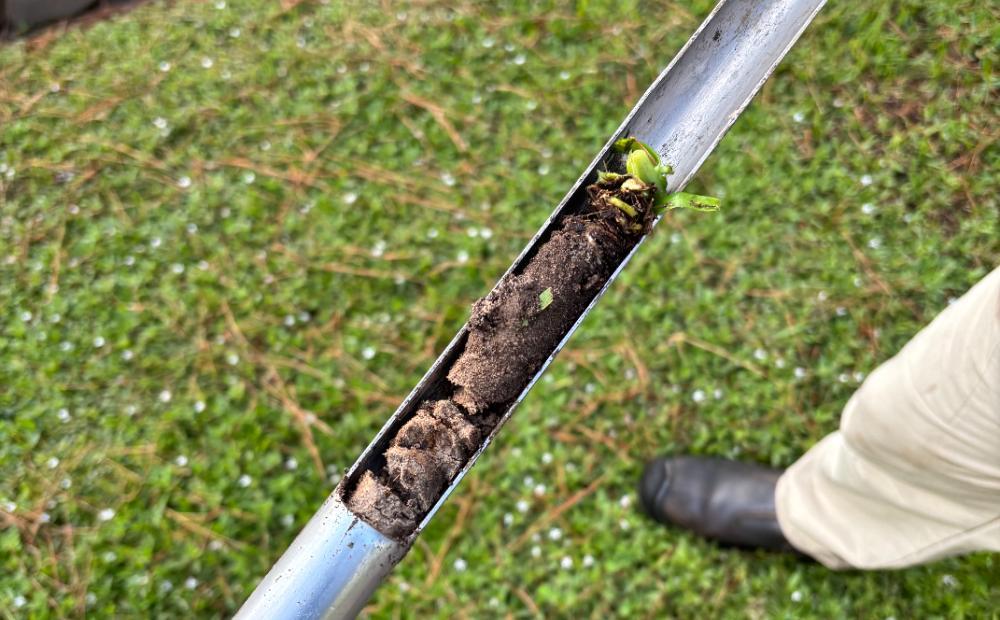
A soil core pulled from a Houston lawn showing dense clay

If your Houston lawn drains like a parking lot and feels like brick by August, someone has probably told you to get it core aerated. It’s the standard advice, and compaction is a real problem here. But punching holes in the yard once a year isn’t the only way to deal with it, and in our gumbo clay it’s often not the best one. Here’s how the two approaches compare and why Thrive uses liquid aeration instead.

The Diagnosis: Houston’s Gumbo Clay Compaction Problem

Most Houston lawns sit on heavy gumbo clay. Its particles are so fine that they pack together tightly under foot traffic, mowers, rain and the weight of the soil itself. Once clay compacts, there’s very little space left for oxygen, water or roots, and St. Augustine starts to struggle from the ground up.

Common signs your lawn is compacted:

Compaction isn’t a one-time event. Every rain, mow and summer bake packs the clay back down, which is why a single treatment rarely solves it for long.

The Drawbacks of Traditional Core Aeration

Mechanical core aeration runs a heavy machine across the lawn that drives hollow tines into the ground and pulls out plugs of soil. It can relieve some compaction, but it comes with real downsides, especially on Houston clay.

It only reaches part of your lawn

A core aerator treats the lawn in spaced-out holes, not as a whole. Even with a careful pass, it provides only about 50% surface coverage at best, leaving large areas of compacted soil between the holes untouched. In sticky clay, the walls of each hole can also smear and glaze over, which limits how far air and water move sideways into the surrounding soil.

It leaves mud plugs all over the yard

Every hole produces a plug of soil, and in gumbo clay those plugs are dense, muddy and slow to break down. They get tracked onto patios and into the house, stick to shoes and paws, and leave the lawn looking torn up for a week or more.

It puts your irrigation system at risk

This is the drawback most homeowners don’t hear about until it’s too late. Sprinkler heads, shallow irrigation lines and low-voltage landscape lighting wires are often hidden just under the grass. A core aerator’s tines don’t know they’re there. Even with flagging, it’s easy to miss a head or crack a line, and repairs can easily cost more than the aeration itself.

The hidden cost

Most traditional companies charge hundreds of dollars for a single mechanical aeration. Add in a broken sprinkler head or two, and one visit can get expensive fast, for a benefit that fades as the clay settles back down.

The Thrive Solution: Liquid Aeration in Every Liquid Application

Instead of punching holes in your lawn once a year, Thrive includes premium liquid aeration in every single liquid application we do, totaling up to 8 times per year. It’s applied as part of your regular visit, with no heavy machines and nothing driven into the ground.

Repeated applications matter, too. Because clay compacts again with every storm and summer bake, treating it up to 8 times a year keeps working on compaction all season instead of relying on one disruptive pass. Paired with our carbon-based granulars and biological supplements, which feed the soil life that builds lasting structure, the clay steadily becomes looser, deeper and better at holding moisture.

Core Aeration vs. Liquid Aeration at a Glance

Core aerationThrive liquid aeration
CoverageAbout 50% of the surface at best100% blanket coverage of the lawn
MessMud plugs left all over the yardNo plugs, no holes, no cleanup
Irrigation riskTines can break hidden sprinkler heads and linesZero risk; nothing goes into the ground
How oftenUsually once a year, if thatEvery liquid application, up to 8 times a year
CostOften hundreds of dollars per visitIncluded in standard service at no extra cost

The Best Part: It’s Included at No Extra Cost

Liquid aeration isn’t an add-on or an upsell at Thrive. It’s included entirely with our standard service at no extra cost, in every liquid application, up to 8 times per year. Traditional companies often charge hundreds of dollars for a single mechanical core aeration. With Thrive, your lawn gets aeration all season long as part of the program you’re already paying for.

If you want to dig deeper into why clay behaves the way it does, read The Gumbo Clay Problem and our guide to Houston clay soil.

Get this done for your lawnHouston Clay Soil Lawn Care

Frequently Asked Questions

Is liquid aeration as good as core aeration for Houston clay?+

For most Houston lawns, yes, and it is easier on the yard. Core aeration pulls plugs from only part of the lawn and its benefit fades as clay settles. Liquid aeration soaks across the entire lawn and works into the soil, helping open microscopic pathways for air and water. Applied repeatedly through the year, it keeps working on compaction instead of relying on one disruptive pass.

Can core aeration damage my sprinkler system?+

It can. Core aerators drive hollow tines several inches into the ground, and sprinkler heads, shallow irrigation lines and low-voltage wiring are often hidden just below the grass. Even with flagging, it is easy to miss one, and a broken head or line can cost more to repair than the aeration itself. Liquid aeration is sprayed on, so nothing ever goes into the ground.

Does Thrive charge extra for liquid aeration?+

No. Liquid aeration is included in every liquid application in Thrive’s standard program, up to 8 times per year, at no extra cost. Many traditional companies charge hundreds of dollars for a single mechanical core aeration.

Free quote · Houston & Kingwood

Get aeration included all season

Tell us about your yard and your local Thrive team will put together a free, no-pressure quote for an organic-first program with liquid aeration included in every liquid application.
Get my free quote → Or call Kingwood 281-358-3378 · Houston 713-364-3303
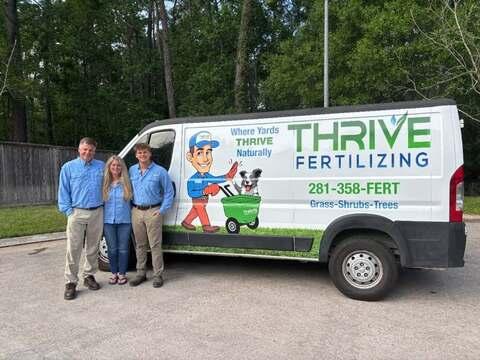
The Bennett family and the Thrive Fertilizing Team
About the author
Thrive Fertilizing Team
Family-owned · 25+ years in Houston lawn care

The Thrive Fertilizing Team is the family-owned crew behind Thrive, formerly Kingwood Fertilizing: Greg, Aimee and Jake Bennett and our local teams in Kingwood and Oak Forest. With 25+ years of Houston lawn care behind us, we write from what we see in real yards every week, from gumbo clay and sandy piney-woods soil to St. Augustine pushing through Texas heat.

Meet the team →
Related services
Houston Clay Soil Lawn Care Monthly Soil Health Program Water-Wise Lawn Care St. Augustine Lawn Care
Get my free quote →
Get my free quote
Call
Which area is your lawn in?
Kingwood area · 281-358-3378Kingwood, Humble, Atascocita, Porter, New CaneyHouston area · 713-364-3303Oak Forest, Garden Oaks, Spring Branch, Bellaire, Memorial
Get Free Quote
Which area is your lawn in?
Kingwood & surrounding →Kingwood, Humble, Atascocita, Porter, New CaneyOak Forest & Houston →Oak Forest, Garden Oaks, Spring Branch, Bellaire, Memorial
★★★★★ 5.0 on Google · Free · Reply in ~10 min
Thrive Fertilizing Formerly
Kingwood Fertilizing
Home / Blog / Core Aeration vs. Liquid Aeration: Why We Don’t Punch Holes in Your Houston Lawn
Lawn Diagnosis Published · 6 min read By the Thrive Fertilizing Team

Core Aeration vs. Liquid Aeration: Why We Don’t Punch Holes in Your Houston Lawn

Core aeration leaves mud plugs, reaches only part of your lawn and risks sprinkler damage. See why Thrive includes liquid aeration in every liquid application for Houston clay.

A soil core pulled from a Houston lawn showing dense clay

If your Houston lawn drains like a parking lot and feels like brick by August, someone has probably told you to get it core aerated. It’s the standard advice, and compaction is a real problem here. But punching holes in the yard once a year isn’t the only way to deal with it, and in our gumbo clay it’s often not the best one. Here’s how the two approaches compare and why Thrive uses liquid aeration instead.

The Diagnosis: Houston’s Gumbo Clay Compaction Problem

Most Houston lawns sit on heavy gumbo clay. Its particles are so fine that they pack together tightly under foot traffic, mowers, rain and the weight of the soil itself. Once clay compacts, there’s very little space left for oxygen, water or roots, and St. Augustine starts to struggle from the ground up.

Common signs your lawn is compacted:

  • Water runs off instead of soaking in, or puddles sit for hours after a normal rain.
  • A screwdriver stops hard an inch or two down, even a day after watering.
  • Thin, shallow-rooted grass that browns out before the neighbors’ in heat or dry spells.
  • Wide summer cracks as the clay shrinks and pulls apart.
  • Bare, worn paths where kids, pets or mowers travel most.

Compaction isn’t a one-time event. Every rain, mow and summer bake packs the clay back down, which is why a single treatment rarely solves it for long.

The Drawbacks of Traditional Core Aeration

Mechanical core aeration runs a heavy machine across the lawn that drives hollow tines into the ground and pulls out plugs of soil. It can relieve some compaction, but it comes with real downsides, especially on Houston clay.

It only reaches part of your lawn

A core aerator treats the lawn in spaced-out holes, not as a whole. Even with a careful pass, it provides only about 50% surface coverage at best, leaving large areas of compacted soil between the holes untouched. In sticky clay, the walls of each hole can also smear and glaze over, which limits how far air and water move sideways into the surrounding soil.

It leaves mud plugs all over the yard

Every hole produces a plug of soil, and in gumbo clay those plugs are dense, muddy and slow to break down. They get tracked onto patios and into the house, stick to shoes and paws, and leave the lawn looking torn up for a week or more.

It puts your irrigation system at risk

This is the drawback most homeowners don’t hear about until it’s too late. Sprinkler heads, shallow irrigation lines and low-voltage landscape lighting wires are often hidden just under the grass. A core aerator’s tines don’t know they’re there. Even with flagging, it’s easy to miss a head or crack a line, and repairs can easily cost more than the aeration itself.

The hidden cost

Most traditional companies charge hundreds of dollars for a single mechanical aeration. Add in a broken sprinkler head or two, and one visit can get expensive fast, for a benefit that fades as the clay settles back down.

The Thrive Solution: Liquid Aeration in Every Liquid Application

Instead of punching holes in your lawn once a year, Thrive includes premium liquid aeration in every single liquid application we do, totaling up to 8 times per year. It’s applied as part of your regular visit, with no heavy machines and nothing driven into the ground.

  • 100% blanket coverage. Liquid aeration is applied evenly across the entire lawn, so every square foot is treated, not just the spots between holes.
  • Microscopic pathways deep into the soil. It soaks down and works tiny channels through the clay, helping drive oxygen and water to the roots where St. Augustine needs them.
  • Naturally breaks up compaction. Instead of cutting plugs out, it helps loosen tight clay particles so the soil opens up and drains better over time.
  • Zero risk to your irrigation system. Because it’s sprayed on, there are no tines, no digging and no chance of damaging sprinkler heads, lines or wiring.
  • No mess. No plugs, no torn-up turf and no cleanup. The yard looks the same the day of your visit as it did the day before.

Repeated applications matter, too. Because clay compacts again with every storm and summer bake, treating it up to 8 times a year keeps working on compaction all season instead of relying on one disruptive pass. Paired with our carbon-based granulars and biological supplements, which feed the soil life that builds lasting structure, the clay steadily becomes looser, deeper and better at holding moisture.

Core Aeration vs. Liquid Aeration at a Glance

Core aerationThrive liquid aeration
CoverageAbout 50% of the surface at best100% blanket coverage of the lawn
MessMud plugs left all over the yardNo plugs, no holes, no cleanup
Irrigation riskTines can break hidden sprinkler heads and linesZero risk; nothing goes into the ground
How oftenUsually once a year, if thatEvery liquid application, up to 8 times a year
CostOften hundreds of dollars per visitIncluded in standard service at no extra cost

The Best Part: It’s Included at No Extra Cost

Liquid aeration isn’t an add-on or an upsell at Thrive. It’s included entirely with our standard service at no extra cost, in every liquid application, up to 8 times per year. Traditional companies often charge hundreds of dollars for a single mechanical core aeration. With Thrive, your lawn gets aeration all season long as part of the program you’re already paying for.

If you want to dig deeper into why clay behaves the way it does, read The Gumbo Clay Problem and our guide to Houston clay soil.

Get this done for your lawnHouston Clay Soil Lawn Care

Frequently Asked Questions

Is liquid aeration as good as core aeration for Houston clay?+

For most Houston lawns, yes, and it is easier on the yard. Core aeration pulls plugs from only part of the lawn and its benefit fades as clay settles. Liquid aeration soaks across the entire lawn and works into the soil, helping open microscopic pathways for air and water. Applied repeatedly through the year, it keeps working on compaction instead of relying on one disruptive pass.

Can core aeration damage my sprinkler system?+

It can. Core aerators drive hollow tines several inches into the ground, and sprinkler heads, shallow irrigation lines and low-voltage wiring are often hidden just below the grass. Even with flagging, it is easy to miss one, and a broken head or line can cost more to repair than the aeration itself. Liquid aeration is sprayed on, so nothing ever goes into the ground.

Does Thrive charge extra for liquid aeration?+

No. Liquid aeration is included in every liquid application in Thrive’s standard program, up to 8 times per year, at no extra cost. Many traditional companies charge hundreds of dollars for a single mechanical core aeration.

Free quote · Houston & Kingwood

Get aeration included all season

Tell us about your yard and your local Thrive team will put together a free, no-pressure quote for an organic-first program with liquid aeration included in every liquid application.

Get my free quote → Or call Kingwood 281-358-3378 · Houston 713-364-3303
The Bennett family and the Thrive Fertilizing Team
About the author
Thrive Fertilizing Team
Family-owned · 25+ years in Houston lawn care

The Thrive Fertilizing Team is the family-owned crew behind Thrive, formerly Kingwood Fertilizing: Greg, Aimee and Jake Bennett and our local teams in Kingwood and Oak Forest. With 25+ years of Houston lawn care behind us, we write from what we see in real yards every week, from gumbo clay and sandy piney-woods soil to St. Augustine pushing through Texas heat.

Meet the team →
Related services
Houston Clay Soil Lawn Care Monthly Soil Health Program Water-Wise Lawn Care St. Augustine Lawn Care
Get my free quote →
Kingwood Team

281-358-3378

Kingwood, Humble, Atascocita, Porter, New Caney

Oak Forest & Houston Team

713-364-3303

Oak Forest, Bellaire, Memorial, Houston

Company
Thrive Fertilizing is the next chapter of Kingwood Fertilizing - the same family-owned organic lawn-care team, now serving Kingwood, Oak Forest, and more Houston neighborhoods.© 2026 Thrive Fertilizing. All rights reserved. Family-owned lawn care in the Houston area.
Find us on Nextdoor Featured in Community Impact
Get my free quote