
Organic St. Augustine Lawn Care in Houston
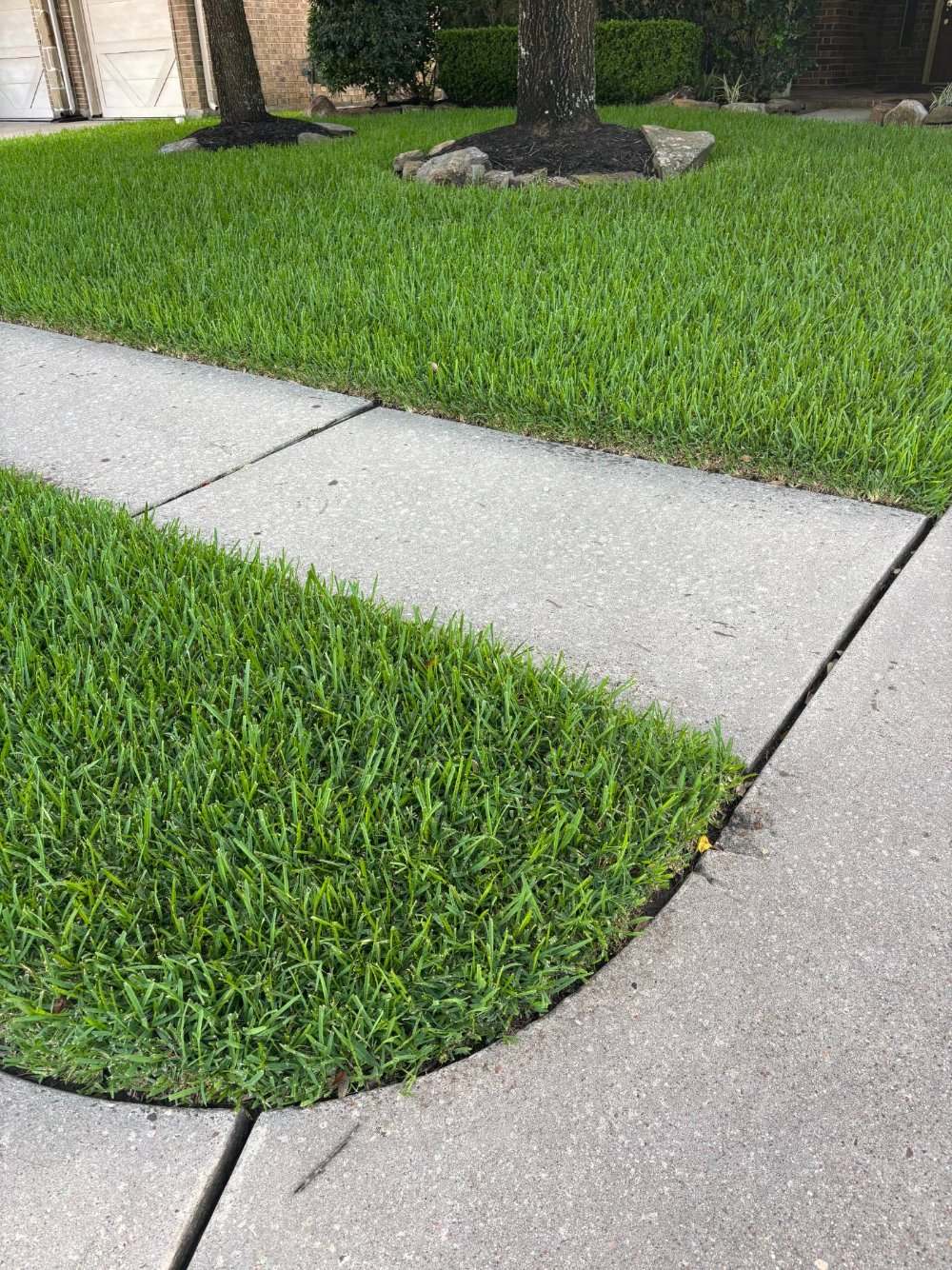
St. Augustine is Houston's grass — it loves heat and humidity but struggles with chinch bugs, brown patch, shade, and clay. We feed it the way it actually grows.
Monthly, soil-first care for Floratam, Raleigh, Palmetto, and other St. Augustine varieties. Formerly Kingwood Fertilizing.
Get My Free Lawn Estimate
We're the kind of company that likes to meet you. An owner walks your yard with you, answers your questions, and gives you your exact price right at the estimate.
Serving Kingwood, Humble, Atascocita, Porter, New Caney, The Groves, Oakhurst, Tavola, Highlands & Benders Landing.
Start My Free Kingwood Quote →Serving Oak Forest/Garden Oaks, Spring Branch, Inner Loop, Bellaire, Galleria/Uptown & Tanglewilde/Memorial.
Start My Free Oak Forest Quote →Built around how St. Augustine really behaves
St. Augustine is a warm-season, Gulf Coast grass that spreads by above-ground runners called stolons. That growth habit is why it can fill in a yard so beautifully — and why it suffers when the soil underneath is compacted, waterlogged, or starved of biology. It also means St. Augustine can't be overseeded like other grasses; thin areas have to be regrown from healthy runners nearby.
Houston throws three signature problems at it. Chinch bugs hit hot, sunny, drought-stressed areas along driveways and sidewalks in mid-summer, leaving yellowing patches that look like drought. Brown patch and large patch fungus show up as expanding rings in fall and spring, when nights are cool and the turf stays wet. And under mature oaks and pines, St. Augustine slowly thins as shade and root competition take over.
Our organic St. Augustine program is designed around all three. Monthly soil feeding builds the root depth and vigor that help turf tolerate chinch bug pressure and regrow faster. We avoid heavy nitrogen pushes in cool, wet months, which are a common trigger for brown patch. And we guide mowing height — St. Augustine does best tall, around 3.5 to 4 inches — plus early-morning watering to keep leaf blades dry overnight.
The goal is a dense, deep-green lawn that holds up to Houston summers, recovers from setbacks, and keeps getting thicker the longer it is on the program.
- ✓ Any Houston lawn with St. Augustine turf
- ✓ Yards with recurring chinch bug or brown patch damage
- ✓ Lawns thinning under oaks, pines, or pecans
- ✓ Homeowners who want thick turf without harsh chemicals
St. Augustine problems we target
Chinch bugs
Healthy, deep-rooted, well-watered turf tolerates summer pressure and recovers faster.
Brown patch / large patch
Seasonal feeding that avoids cool-weather nitrogen spikes, plus watering guidance.
Gray leaf spot
Balanced feeding and dry-blade watering reduce the conditions this summer disease favors.
Shade thinning
Soil support for turf under canopy, and honest advice where grass will not grow.
Scalping
Mowing-height guidance keeps runners protected and soil shaded.
Take-all root rot
Improved soil biology supports healthier roots in wet, compacted areas.
Your St. Augustine Lawn Care plan, step by step
We read your St. Augustine
Variety, shade, pest history, and soil condition shape your plan.
We feed by the season
Monthly organic applications timed to Houston's St. Augustine growth cycle.
Your turf thickens
Runners knit together, thin spots fill in, and setbacks heal faster.
Pairs well with
St. Augustine care questions
How do I know if I have chinch bugs or drought stress?+
Chinch bug damage usually starts in the hottest, sunniest spots — near driveways, sidewalks, and south-facing beds — and spreads outward even after watering. Part the grass at the edge of a yellow patch; chinch bugs are tiny black-and-white insects near the soil line. Your technician can check for you.
When does brown patch show up in Houston?+
Brown patch and large patch are most active in fall and spring, when nights are cool and the turf stays wet for long periods. Watering early in the morning and avoiding heavy nitrogen in cool months both help.
What height should I mow St. Augustine?+
Most St. Augustine varieties do best at about 3.5 to 4 inches. Taller blades shade the soil, protect the runners, and help crowd out weeds.
Ready for thicker, healthier St. Augustine?
Get a free quote for organic St. Augustine care from the local team that knows Houston grass.