
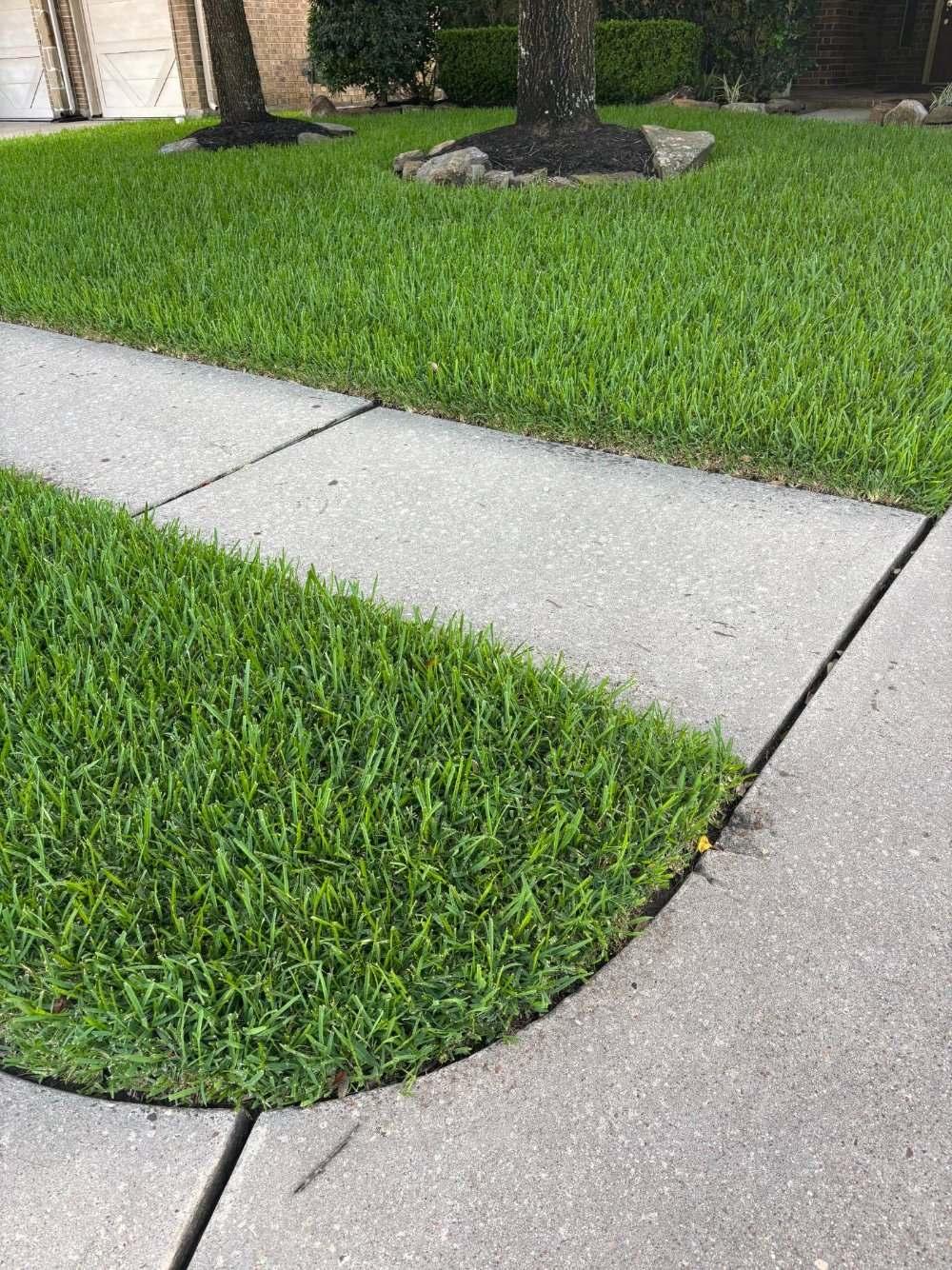
We see it every week on Kingwood streets: a lawn that looks freshly cut and tidy for a day, then turns patchy and brown at the tips, with crabgrass and dollarweed popping up along the edges. The homeowner is doing everything they think is right. The real problem is the mower deck is set too low.
The Diagnosis: Signs Your Lawn Is Being Scalped
“Scalping” means cutting St. Augustine so short that you remove most of the green blade and expose the stems, runners or even bare soil. It’s especially common with mowing crews that set every lawn to the same low height for a clean look. Here’s how to tell if it’s happening to yours:
- Brown or straw-colored stripes a day or two after mowing, especially on high spots and slopes.
- Visible runners and stems instead of green blades when you look straight down at the lawn.
- Thin coverage where you can see soil between the plants.
- Heavy weed pressure, especially crabgrass, dollarweed and sedges, in the sunniest parts of the yard.
- Grass that stresses fast in summer heat, turning brown before the neighbors’ lawns do.
Why Cutting Short Hurts St. Augustine
St. Augustine is a broad-bladed, warm-season grass that’s built to grow tall. Its blades are the solar panels that power the whole plant. Cut too much off at once and the grass has to burn stored energy just to recover, which leaves less for roots and runners.
Root depth tends to follow blade height. A lawn kept short tends to have short, shallow roots that dry out quickly in Kingwood’s sandy, piney-woods soils. And a short canopy lets sunlight hit the soil surface, warming it up and giving weed seeds exactly what they need to sprout.
Never remove more than one-third of the blade in a single mowing. If the lawn has grown to 6 inches, take it down to 4, not 2. During fast spring and early-summer growth, that may mean mowing every five to seven days.
The Right Mowing Height for St. Augustine
For most Kingwood and Houston St. Augustine lawns, the target is 3.5 to 4 inches, all year long, including the first mow in spring. Shadier yards under pines and oaks often do best at the top of that range, since taller blades capture more light.
| Mowing height | What happens |
|---|---|
| Under 2.5 inches | Scalping, exposed runners, shallow roots, heavy weed pressure and fast summer stress. |
| 2.5 to 3 inches | Thinner canopy with sunlight reaching the soil. Weeds find gaps easily. |
| 3.5 to 4 inches | Dense canopy, shaded soil, deeper roots and natural weed suppression. The sweet spot. |
Mowing tips that make a difference
- Measure your deck. Set the mower on a driveway and measure from the pavement to the blade. Many “high” settings are lower than you think.
- Keep blades sharp. Dull blades tear the grass, leaving ragged brown tips that invite disease.
- Mow when the grass is dry for a clean cut and less clumping.
- Leave the clippings. They break down quickly and return organic matter to the soil.
- Tell your mowing crew. If someone else mows, ask them to raise the deck for your yard. It’s one of the simplest upgrades you can make.
Why a Taller Canopy Is the Best Natural Weed Defense
Most common Houston weeds need sunlight on bare soil to germinate. A tall, dense St. Augustine canopy blocks that light, keeps the soil cooler and leaves no open space for weeds to take hold. It’s the most effective weed control there is, and it doesn’t come from a spray tank.
That’s why proper mowing works hand-in-hand with Thrive’s organic-first fertilization program. Our carbon-based granulars and liquid supplements feed the soil biology, helping St. Augustine grow deeper roots and stronger runners that thicken the canopy. Mowing tall lets that thicker turf do its job.
Together, they let us skip pre-emergent herbicides entirely. Pre-emergents work by stopping seeds from rooting, but they can also stunt the roots of the grass you’re trying to grow, which is the opposite of what a thin lawn needs. Instead, we rely on a dense canopy for weed suppression, with targeted spot care for the occasional weed that slips through. Learn more in our guide to weed control without spraying.
What to Expect After You Raise the Mower
Most lawns respond within a few weeks. The color evens out, the brown stripes after mowing disappear, and the canopy begins to close in. Paired with a steady soil-feeding program, many Kingwood yards see noticeably fewer weeds by the next season, because the lawn itself is crowding them out. See how it played out for one family in our Kingwood weedy-yard success story.
Get this done for your lawnNatural Weed SuppressionFrequently Asked Questions
What height should I mow St. Augustine grass in Kingwood?+
Mow St. Augustine at 3.5 to 4 inches all year, including the first spring mow. Shadier yards often do best at the top of that range. Never remove more than one-third of the blade in a single mowing.
Can mowing too short cause weeds?+
Yes. Cutting St. Augustine too short thins the canopy and lets sunlight reach the soil, which is what most weed seeds need to sprout. A taller, denser canopy shades the soil and naturally suppresses most weeds.
Does Thrive use pre-emergents?+
No. Pre-emergents can stunt the roots of St. Augustine along with the weeds. Thrive relies on a thick, tall canopy built by feeding the soil, paired with proper mowing height, and uses targeted spot care for weeds that slip through.
See what your lawn really needs
Tell us about your yard and your local Thrive team will put together a free, no-pressure quote for an organic-first program built around your soil.
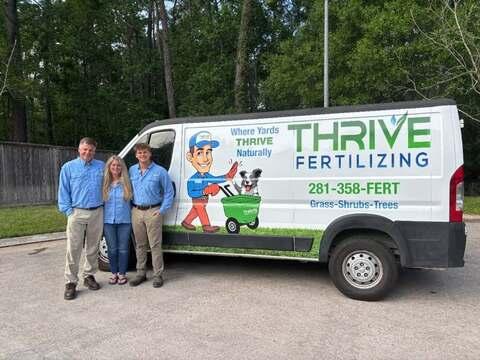
The Thrive Fertilizing Team is the family-owned crew behind Thrive, formerly Kingwood Fertilizing: Greg, Aimee and Jake Bennett and our local teams in Kingwood and Oak Forest. With 25+ years of Houston lawn care behind us, we write from what we see in real yards every week, from gumbo clay and sandy piney-woods soil to St. Augustine pushing through Texas heat.
Meet the team →