
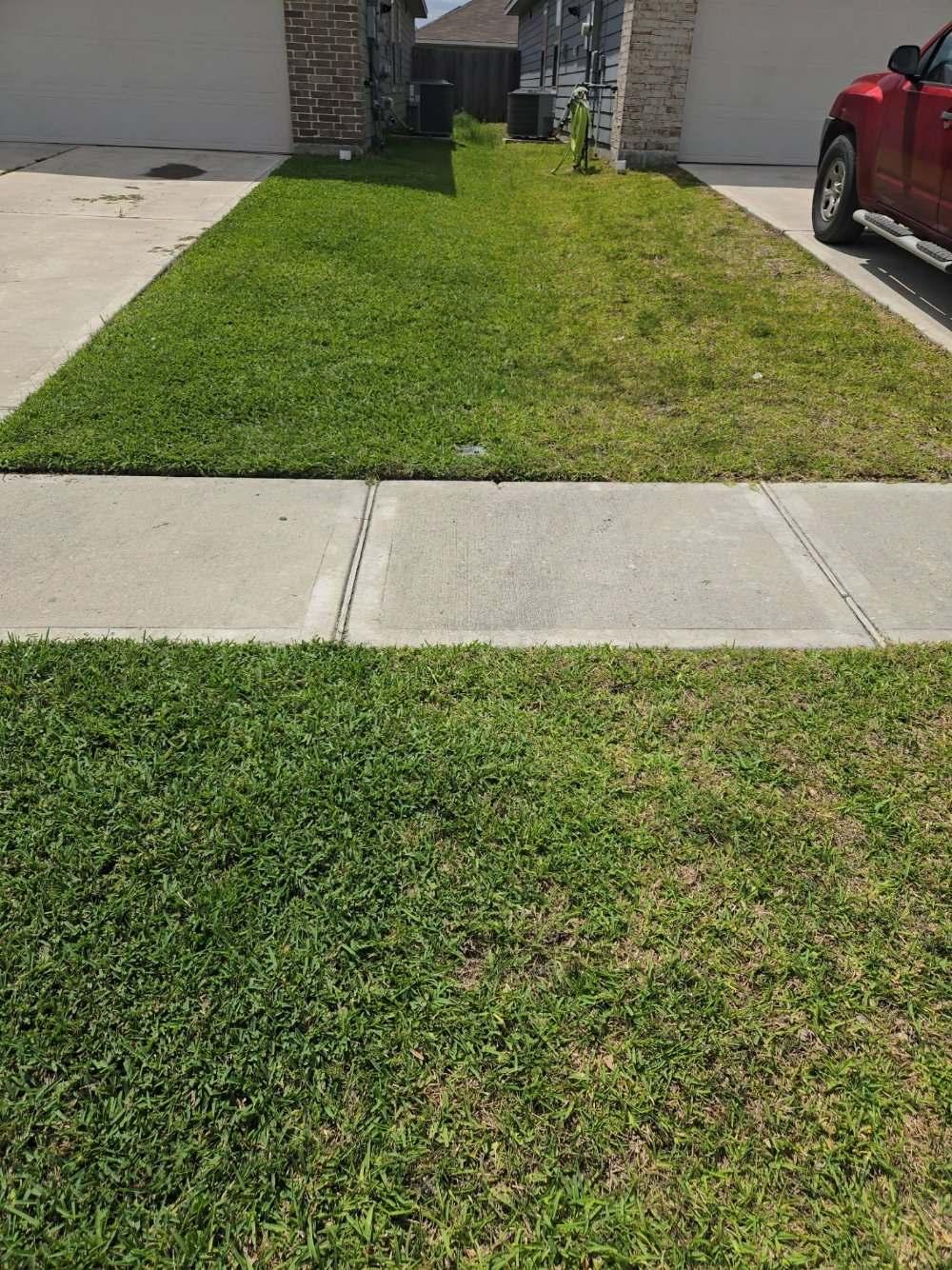
Brown patches in a St. Augustine lawn are one of the most common calls we get from Houston and Kingwood homeowners. The trouble is that two very different problems can look similar from the street: Large Patch, a fungal disease, and chinch bugs, a tiny insect. They need different responses, and treating the wrong one wastes time and money while the damage spreads.
Large Patch: The Cool, Wet-Season Fungus
Large Patch (sometimes still called brown patch in St. Augustine) is caused by a soil fungus that becomes active when nights cool down and the grass stays wet for long stretches. In the Houston area, that means fall through spring, especially after rainy weeks or when sprinklers run at night.
- Shape: circular or ring-shaped patches, from a couple of feet to 10 feet or more across. They often have a yellow-orange “smoke ring” at the edge while the disease is active.
- Location: low spots, shady areas, poorly draining clay and anywhere water sits.
- The blade test: gently tug a yellowing blade at the edge of the patch. With Large Patch, the blade usually slips out of its sheath easily, and the base looks dark and rotted.
- Timing: shows up when daytime temperatures are mild and the lawn stays damp.
Chinch Bugs: The Hot, Dry-Season Insect
Chinch bugs are tiny insects, smaller than a grain of rice, that suck the sap out of St. Augustine and inject a toxin that kills the grass. They thrive in the opposite conditions from Large Patch: hot, dry and sunny, which in Houston means June through September.
- Shape: irregular, spreading patches that start yellow and turn straw-brown, without a clear ring.
- Location: the hottest, sunniest parts of the yard, along driveways, sidewalks, curbs and south- or west-facing beds.
- The water test: the patches keep spreading outward even after you water. Drought-stressed grass recovers with water; chinch bug damage doesn’t.
- The can test: cut both ends off a coffee can, push it a couple of inches into the soil at the edge of a damaged area, and fill it with water. Within five to ten minutes, any chinch bugs will float to the surface. Look for tiny black insects with white wing markings, or reddish nymphs.
Side-by-Side: How to Tell Them Apart
| Large Patch (fungus) | Chinch bugs (insect) | |
|---|---|---|
| Season | Fall through spring, mild and wet | Summer, hot and dry |
| Pattern | Circular rings, often with an orange edge | Irregular patches that spread outward |
| Where | Shady, low, wet spots | Sunny areas near pavement |
| Blade test | Blades pull out easily, rotted at the base | Blades stay attached, dry and straw-colored |
| After watering | Often gets worse | Keeps spreading |
Drought stress, take-all root rot and even dog spots can mimic both problems. If you’re unsure, a free lawn assessment from your local Thrive team is the quickest way to know what you’re dealing with before anything gets applied.
Treating the Problem You Actually Have
Both issues need a specific, targeted response. For Large Patch, the first step is reducing moisture: water only in the early morning, avoid night watering, improve drainage and don’t push heavy nitrogen in the cool season. For an active chinch bug infestation, a targeted treatment of the affected area and its edges is usually needed to stop the spread. Your technician will tell you what they see and recommend the right next step for your yard.
What we don’t recommend is blanket-spraying the whole lawn “just in case.” Broad treatments are hard on the beneficial soil life and insects that help keep problems in check, and they don’t fix the underlying conditions that let the problem in.
The Long-Term Defense: A Resilient Lawn
Here’s the pattern we see over and over: both Large Patch and chinch bugs hit stressed lawns hardest. Thin turf on compacted clay, shallow roots, soft growth from heavy synthetic nitrogen and soil that stays soggy or bakes dry all make a lawn more vulnerable. Healthy, deeply rooted St. Augustine on living soil tends to resist damage better and recover faster when something does show up.
That’s why Thrive’s organic-first program focuses on building resilience from the ground up. Alongside our carbon-based granulars, each visit includes liquid organic supplements such as:
- Seaweed extract, a source of natural plant hormones, trace minerals and compounds that help grass handle heat and drought stress and support its natural defenses.
- Humic acid, which helps the soil hold water and nutrients, feeds beneficial microbes and supports deeper rooting.
Together, they help St. Augustine build natural plant immunity and reduce stress during the brutal Texas heat, so the lawn is better equipped to stand up to both fungus and insects. Because our approach feeds steadily instead of forcing quick, soft growth, it also avoids the nitrogen surges that tend to invite chinch bugs and disease.
Simple Habits That Lower the Risk of Both
- Water early in the morning, deeply and less often, so the grass dries during the day. See our watering mistakes guide.
- Mow at 3.5 to 4 inches with a sharp blade to reduce stress and shade the soil.
- Watch the hot spots along driveways and sidewalks closely in July and August.
- Improve drainage in low, soggy areas, where Large Patch usually starts. Our gumbo clay guide explains how.
- Keep thatch in check by feeding soil biology, which helps break it down naturally. Heavy thatch is where chinch bugs like to hide.
For more on keeping St. Augustine strong through the hottest months, read our summer heat guide.
Get this done for your lawnSt. Augustine Lawn CareFrequently Asked Questions
How can I tell if my lawn has chinch bugs or a fungus?+
Check the timing, shape and location. Large Patch fungus shows up in mild, wet weather as circular rings in shady or low areas, and blades at the edge pull out easily with rotted bases. Chinch bug damage appears in hot, dry summer weather as irregular patches in sunny spots near pavement and keeps spreading even after watering. A coffee-can flotation test can confirm chinch bugs.
When is Large Patch most active in Houston?+
Large Patch is most active from fall through spring in the Houston area, when nights are cool and the grass stays wet for long periods. Night watering and poorly draining clay soil make it more likely.
Can organic lawn care help prevent chinch bugs and Large Patch?+
A healthy lawn is the best long-term defense. Active problems may need a specific, targeted treatment, but feeding the soil and using liquid organic supplements like seaweed extract and humic acid help St. Augustine build deeper roots and natural resilience, reduce heat stress and recover faster.
See what your lawn really needs
Tell us about your yard and your local Thrive team will put together a free, no-pressure quote for an organic-first program built around your soil.
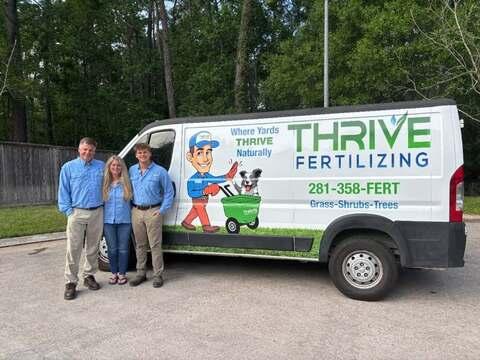
The Thrive Fertilizing Team is the family-owned crew behind Thrive, formerly Kingwood Fertilizing: Greg, Aimee and Jake Bennett and our local teams in Kingwood and Oak Forest. With 25+ years of Houston lawn care behind us, we write from what we see in real yards every week, from gumbo clay and sandy piney-woods soil to St. Augustine pushing through Texas heat.
Meet the team →