
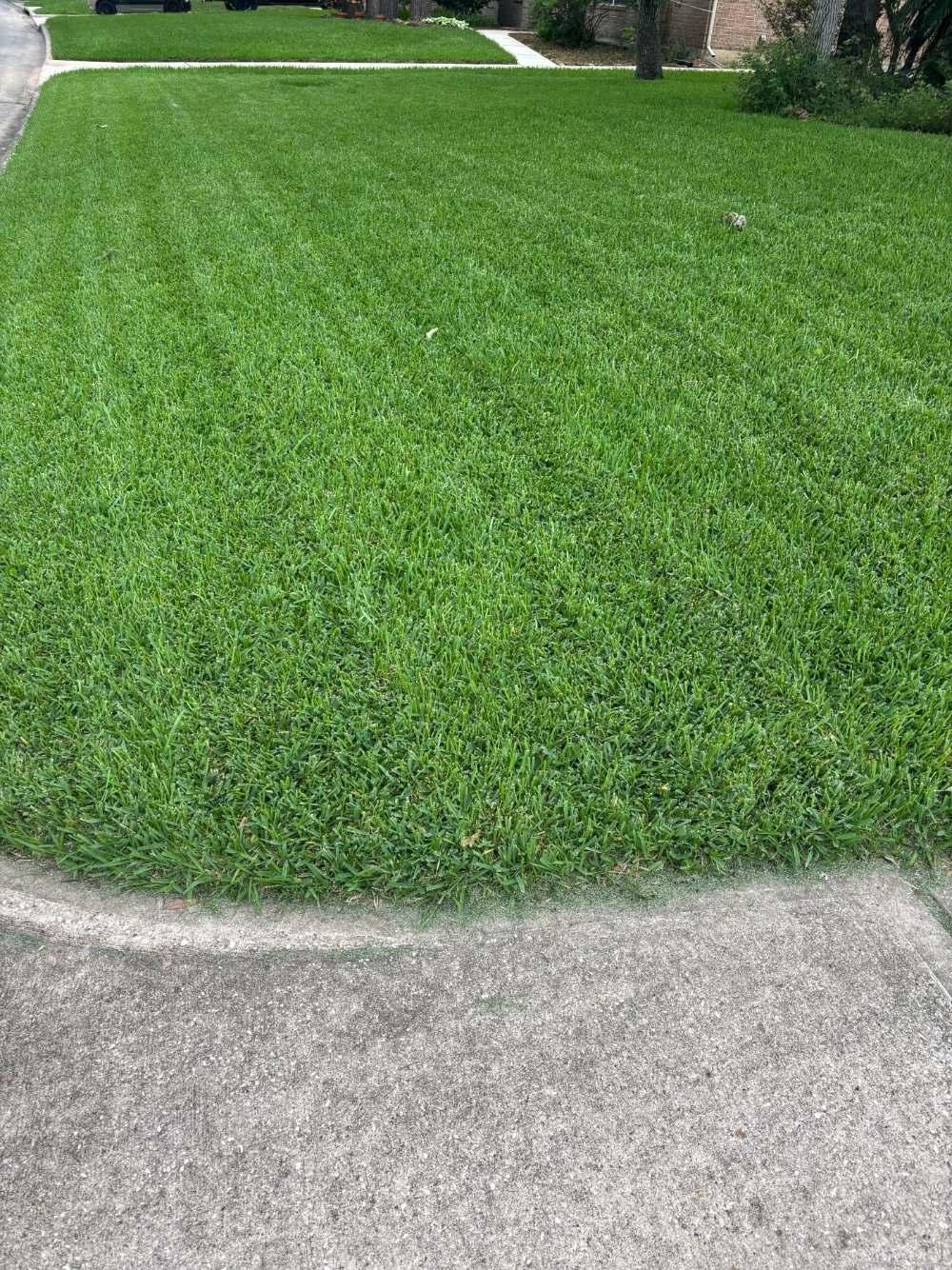
How Much to Water in a Houston Summer
Most Houston lawns need about an inch of water a week in summer, from rain and sprinklers combined. On clay, the best way to get it there is one or two deep waterings a week before sunrise, split into shorter cycles if water starts running off. A tuna can or rain gauge on the lawn tells you exactly how long your system takes to put down an inch.
Healthy soil stretches that water further. Our carbon-based granulars are designed to help the soil lock in moisture, and liquid aeration on every visit helps water soak into compacted clay instead of running down the curb.
Heat Stress or Something Else?
Not every brown spot in July is drought. A quick check helps you fix the right problem.
- Drought stress. Grass turns bluish-gray, blades fold, and footprints stay pressed down. It greens back up after a deep watering.
- Chinch bugs. Patches start in the hottest, sunniest spots near pavement, spread outward, and don't recover with water.
- Brown patch. Less common in peak heat, but it can appear after a run of humid nights and evening watering.
- Mower stress. Dull blades and low cuts leave tips frayed and tan. Sharpen the blade and keep St. Augustine at 3.5 to 4 inches.
What Not to Do in the Heat
Skip the synthetic fertilizer and the weed-and-feed in July and August. Salt-based products pull moisture from stressed turf and can scorch it, and herbicides are hardest on grass that's already struggling. Mowing lower to "make it look neater" does the same kind of damage.
Our monthly program keeps going through summer because organic feeding doesn't burn. It supports the soil and roots through the stress instead of forcing growth the lawn can't sustain. Natural weed suppression is included with every regular visit as well, so the turf keeps thickening even when it isn't growing fast.
Get this done for your lawnWater-Wise Lawn CareWhen July and August hit, Houston lawns face triple-digit heat indexes, weeks without rain, and then sudden downpours that flood compacted clay. Grass that only has shallow roots and depleted soil simply can’t cope. Grass growing in living, healthy soil can.
Why Summer Reveals Your Soil’s Health
Summer stress doesn’t create lawn problems — it exposes them. A lawn fed on quick-release synthetics looks green in May and collapses in August because it never built deep roots. Our organic program spends spring building the root system and soil biology that summer demands.
How We Protect Lawns in Summer
- Steady organic feeding that never burns — even in extreme heat
- Soil biology that holds moisture longer between waterings
- Deeper roots that reach water synthetic-fed lawns can’t
- Natural resistance to chinch bugs and brown patch, which target stressed turf
Your Summer Checklist
- Water deeply, early, and less often. One or two deep waterings a week before sunrise beat daily sprinkles.
- Mow high — 3.5 to 4 inches. Tall grass shades the soil and keeps roots cooler.
- Keep mower blades sharp. Ragged cuts lose extra moisture and invite disease.
- Don’t fertilize with synthetics in the heat. They can scorch stressed turf overnight.
If your lawn is browning while the neighbor’s stays green, the difference is almost always below the surface. Build the soil, and summer becomes survivable — even in Houston.
Frequently Asked Questions
How often should I water my lawn in a Houston summer?+
Usually once or twice a week, deeply, before sunrise, for a total of about an inch of water including rain. On clay soil, split each watering into shorter cycles if water starts running off. Deep, infrequent watering trains roots to grow down, which helps St. Augustine handle Houston heat far better than daily light sprinkling.
Should I fertilize my lawn during a Houston summer?+
Not with synthetics. Salt-based fertilizer can scorch heat-stressed grass and pull moisture from the soil. Organic soil feeding is different, because it doesn't burn and it supports roots and soil biology through the stress. Thrive's monthly program continues through summer for that reason, along with liquid aeration to help water soak into clay.
How do I know if my grass is dead or just dormant from heat?+
Tug gently on a handful of brown grass. Dormant St. Augustine stays firmly rooted and the runners stay pliable, with some green near the base. Dead grass pulls up easily with dry, brittle roots. Dormant grass usually greens back up within a week or two of deep watering or rain.

Jake is the one actually on your lawn. He runs applications week to week across Kingwood, Humble and Atascocita, which means he sees how these programs perform season after season on the same yards — including yours.
More about the Bennett family →Ready to transform your lawn? Call your local Thrive team or book a free assessment. We'll look at your specific yard and recommend the right program.