
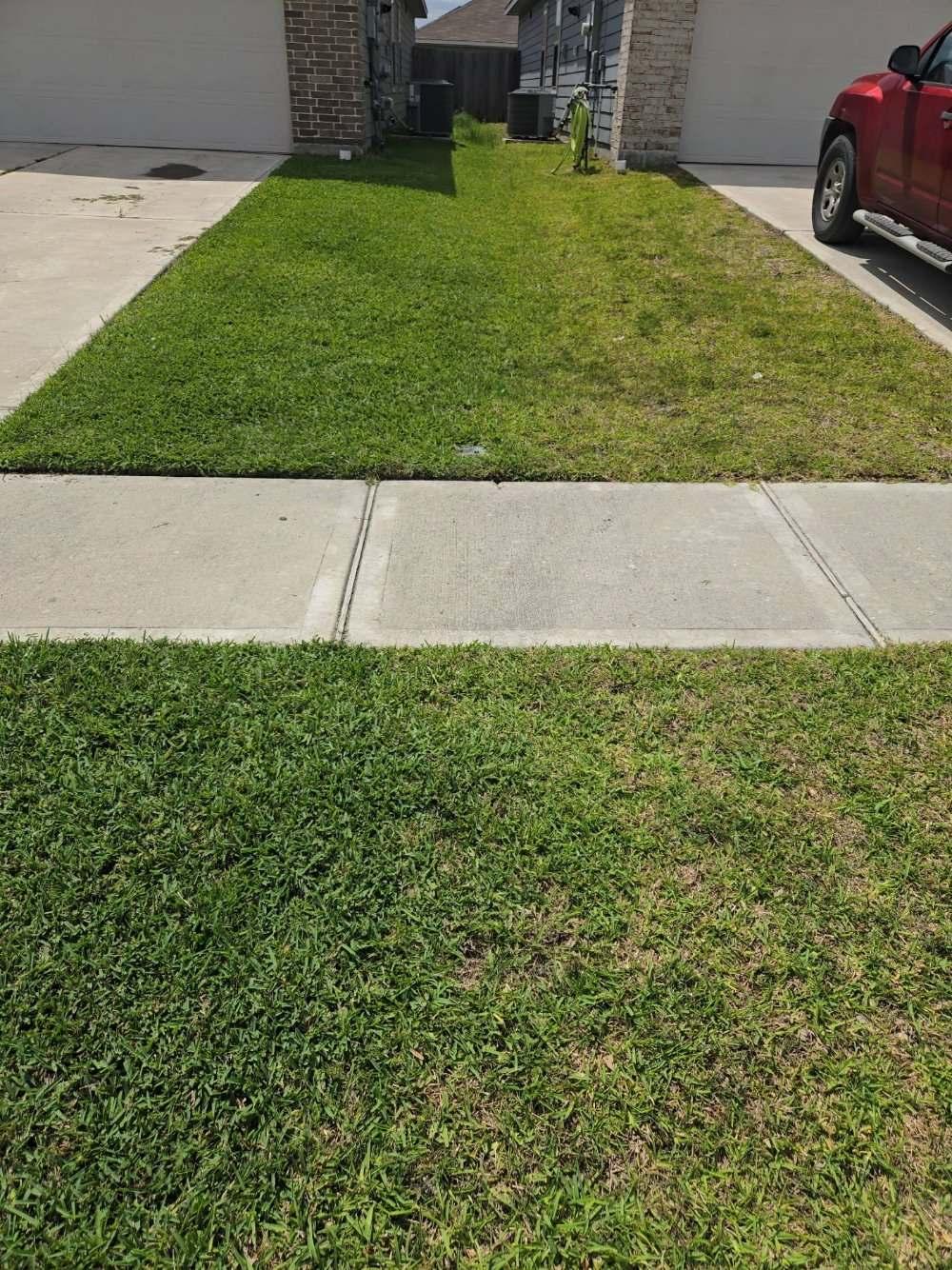
How to Set Your Sprinklers on Clay Soil
A few minutes with your controller can fix most watering problems.
- Find your inch. Set a few empty tuna cans across each zone and time how long it takes to fill them an inch deep.
- Cycle and soak. On clay, split that time into two or three shorter runs about an hour apart so the water soaks in instead of running off.
- Start early. Schedule runs to finish between 4 and 8 a.m. so blades dry quickly as the sun comes up.
- Add a rain sensor. A simple rain or freeze sensor stops the system from watering in a storm.
- Zone by need. Give full-sun turf more time than shady beds, and check slopes for runoff.
Healthy Soil Needs Less Water
Watering habits matter, but the soil decides how far each inch goes. Compacted clay sheds water and dries out fast. Soil rich in organic matter soaks it up and holds it like a sponge, so the lawn can go longer between waterings.
That's a big part of how our program works. Our carbon-based granulars are designed to help the soil lock in moisture, and liquid aeration, included in every monthly application, helps water move down into compacted clay. Salt-based synthetic fertilizers do the opposite: they dry the soil out and push homeowners to water more.
Adjusting Through the Year
Houston lawns need the most water in July and August and far less in spring, fall and winter. In winter, St. Augustine is semi-dormant and usually gets by on rain alone, with an occasional deep watering in a dry spell. Overwatering in cool, damp months is one of the easiest ways to invite brown patch.
Check your controller at least at the start of each season. A schedule that was right for August will drown a lawn in November.
Get this done for your lawnWater-Wise Lawn CareWatering feels like the simplest part of lawn care, but it’s where most damage happens. Here are the five mistakes we see most, and what to do instead.
1. Watering Every Day
Daily light watering keeps only the top inch of soil moist, so roots stay shallow — then the first hot week kills the lawn. Water deeply once or twice a week instead; the dry days force roots to grow down after moisture.
2. Watering in the Evening
Grass that stays wet overnight is an invitation to brown patch and other fungal diseases — especially in our humidity. Water between 4 and 8 a.m., so blades dry with the morning sun.
3. Runoff on Clay
Houston clay absorbs water slowly. If it’s running down the curb after 10 minutes, split the watering: two shorter cycles an hour apart soak in far better than one long one.
4. Ignoring the Rain
A lawn needs about an inch of water a week, from any source. Running sprinklers the day after a storm drowns roots and breeds fungus. A cheap rain gauge — or a rain sensor on your controller — pays for itself.
5. Watering Everything the Same
Shade beds, full-sun turf, and slopes all need different amounts. Watch for stress signals: bluish-gray color and footprints that don’t bounce back mean it’s time to water; mushrooms mean you’ve overdone it.
Deep, early, infrequent, and adjusted to the weather — get watering right and every other part of lawn care gets easier.
Frequently Asked Questions
How long should I run my sprinklers in Houston?+
Long enough to put down about an inch of water per week in summer, including rain, which you can measure with tuna cans on the lawn. Many systems need 20 to 40 minutes per zone, but it varies widely. On clay soil, split that time into shorter cycles about an hour apart so water soaks in instead of running off.
What is the best time of day to water my lawn in Houston?+
Early morning, between about 4 and 8 a.m. Water soaks in before the heat picks up, and the grass dries quickly once the sun is up, which helps prevent brown patch and other fungal problems in Houston's humidity. Evening watering leaves the lawn wet overnight and is the main thing to avoid.
Why does water run off my lawn instead of soaking in?+
Houston clay absorbs water slowly, and compaction makes it worse. Splitting watering into shorter cycles helps right away. Long term, adding organic matter and loosening compaction lets the soil take in water like a sponge. Thrive includes liquid aeration in every monthly application to help water move down into compacted clay.

Jake is the one actually on your lawn. He runs applications week to week across Kingwood, Humble and Atascocita, which means he sees how these programs perform season after season on the same yards — including yours.
More about the Bennett family →Ready to transform your lawn? Call your local Thrive team or book a free assessment. We'll look at your specific yard and recommend the right program.