Signs Your Soil Is Alive (or Isn't)
You can't see bacteria and fungi, but you can see what they do. A quick look at your yard tells you a lot.
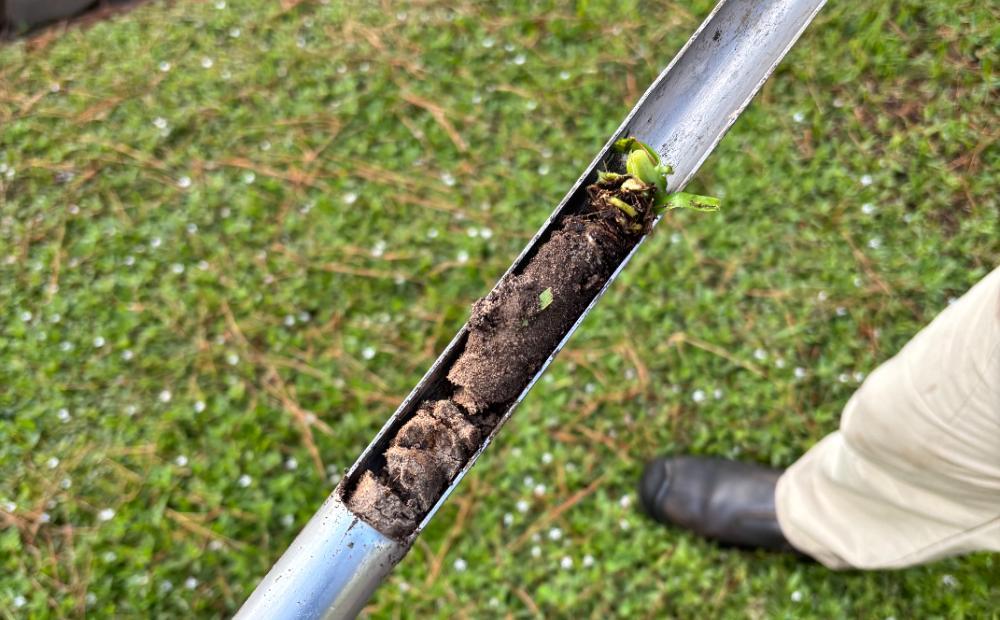
- Earthworms. Dig a shovel's depth after a rain. Several worms is a good sign; none usually means the soil life has been knocked back.
- Dark, crumbly topsoil. Healthy soil looks dark and breaks into crumbs. Pale, hard clay that comes up in clods is short on organic matter.
- Clippings that disappear. In living soil, mulched clippings break down within days instead of building into thatch.
- Water that soaks in. Microbe-built soil structure lets rain move down instead of running off.
How Thrive Feeds the Soil Food Web
Every visit is built around feeding that underground workforce. Our proprietary carbon-based granulars give microbes the carbon they run on, and they help the soil lock in moisture. Our premium liquid biological supplements add beneficial biology directly, and liquid aeration, included in every monthly application, helps open compacted clay so air and water can reach the root zone where the microbes live.
What we leave out matters just as much. There are no synthetic salts, no plastic-coated prills and zero pre-emergents in our program, because those are exactly the inputs that knock microbial populations back.
Why Monthly Matters
Soil life responds to steady feeding. A big application once or twice a year creates a short boom, and then the population falls back. Monthly feeding keeps a consistent food supply in the ground, so the microbe population builds month over month and the soil structure keeps improving instead of starting over each season.
That's also why organic results build slowly and then keep getting better. The first months are mostly underground. As the biology catches up, most lawns start holding color longer between waterings, rooting deeper and thickening up on their own.
Get this done for your lawnMonthly Soil Health ProgramBeneath a thriving lawn is an invisible economy: bacteria breaking down organic matter, fungi ferrying water and nutrients to roots, and thousands of other organisms cycling nutrients in a loop that never stops. Grass evolved with this system. It doesn’t grow well without it.
What Microbes Do for Grass
- Convert organic matter into plant-available nutrients — nature’s slow-release fertilizer
- Extend root reach through fungal networks, multiplying water access
- Suppress disease organisms by outcompeting them
- Build soil structure that holds air and moisture in our clay
How Modern Lawn Care Kills Them
Salt-based fertilizers, fungicides, and broad herbicides are hard on microbial life. Each application knocks the population back — which is why chemically-maintained lawns become dependent: with the biology gone, the grass can only eat what comes out of a bag.
How We Feed Them Instead
Every Thrive application is designed as food for the underground workforce — organic nutrition that builds the population month over month. As microbial life recovers, the lawn needs less help from anyone: it holds water longer, finds its own nutrients, and resists disease naturally.
Feed the microbes, and the microbes feed the lawn. That’s the entire philosophy in one sentence.
Frequently Asked Questions
How do I add beneficial microbes to my lawn soil?+
Feed them consistently and stop knocking them back. Carbon-rich organic inputs and liquid biological supplements add food and beneficial biology, while avoiding synthetic salts and harsh chemicals keeps the population growing. Thrive's monthly program does both on every visit, along with liquid aeration to open compacted clay so air and water reach the root zone.
Do synthetic fertilizers kill soil microbes?+
Salt-based synthetic fertilizers are hard on soil life. They pull moisture out of the soil and can knock microbial populations back with each application, which is part of why chemically fed lawns often need more and more inputs. Organic feeding works the other way: it feeds the microbes, and the microbes feed the grass.
How long does it take to improve soil health?+
Changes start underground within the first few months of steady feeding. Most Houston lawns on a consistent monthly organic program begin holding color longer and filling in thin areas over the first season, and the soil keeps improving the longer it stays on the program because each month builds on the last.
Greg spent 25+ years building a lawn care business with his dad and brother before starting Thrive with his wife Aimee and son Jake. He has been reading Houston soil — gumbo clay, sandy piney woods, and everything between — since the 1990s.
More about the Bennett family →Ready to transform your lawn? Call your local Thrive team or book a free assessment. We'll look at your specific yard and recommend the right program.