
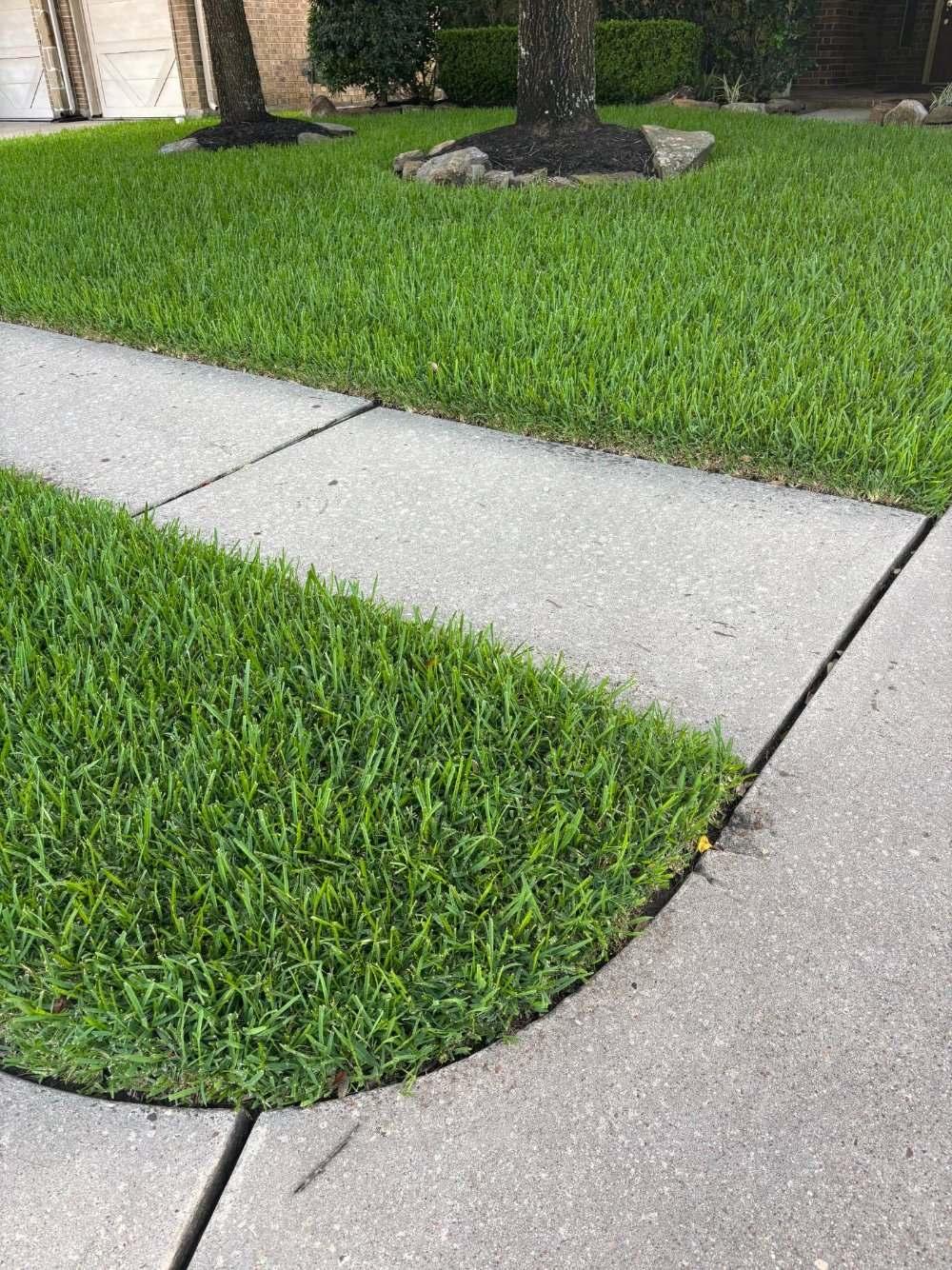
St. Augustine grass is native to the Gulf Coast and thrives in Houston's heat and humidity. Unlike northern cool-season grasses, it actively grows during our brutally hot summers. But that doesn't mean it's easy — St. Augustine faces unique challenges in Houston's clay soil and urban environment.
Why St. Augustine Struggles in Houston
Houston clay is dense and compacts easily — and compacted soil is St. Augustine's enemy. Compaction restricts root growth, reduces drainage, and makes it hard for nutrients to reach the grass. Add shade from mature trees and poor initial soil conditions, and many Houston St. Augustine lawns end up thin, weedy, and stressed.
What St. Augustine Actually Needs
- Deep, healthy soil — St. Augustine roots need to go down 4–6 inches. Compacted soil stops them at 2 inches.
- Good drainage — Houston rain falls hard. Waterlogged clay kills St. Augustine faster than drought.
- Consistent feeding — Not fast-release synthetics that force quick growth. Steady organic feeding that builds soil health.
- Shade tolerance — Many yards are 40–50% shade. St. Augustine can handle it, but needs help in poor soil.
Our St. Augustine Program
We focus on soil health from day one. Our monthly applications build microbial activity and loosen compacted clay over time. As the soil improves, St. Augustine roots go deeper and the grass naturally gets thicker and stronger.
We don't fight St. Augustine's nature — we work with it. Summer feeding keeps it strong through heat. Fall recovery rebuilds what summer stress took. Winter applications support root health below the surface.
What You Can Do
- Mow at 3.5–4 inches. Higher mowing shades soil, keeps roots cooler, and crowds out weeds.
- Water deeply once per week (or when soil is dry 2 inches down). Avoid daily light watering.
- Let dead leaves stay in late fall. They feed the soil as they decompose.
- Avoid synthetic quick-release fertilizers. They weaken soil structure and create boom-bust cycles.
Common St. Augustine Problems in Houston
Most St. Augustine trouble in Houston comes down to a handful of issues, and most of them hit stressed turf first.
- Chinch bugs. They show up in hot, sunny, drought-stressed spots along driveways and sidewalks in mid-summer, leaving patches that look dry but don't green up with water.
- Brown patch and large patch. These fungi are most active in spring and fall when nights are cool and the grass stays wet. Watering early in the morning helps a lot.
- Shade thinning. St. Augustine is the most shade-tolerant warm-season grass, but under heavy oak canopy it thins out, especially in poor soil.
- Scalping. Mowing too low weakens the runners and lets weeds in. Keep it at 3.5 to 4 inches.
How Thrive's Program Fits St. Augustine
Houston's gumbo clay and St. Augustine grass need specific, localized care. Instead of fighting the soil, our proprietary carbon-based granular program and liquid biological supplements work to naturally break up compacted clay, retain moisture and build a thick, resilient St. Augustine canopy without harsh synthetic salts.
Liquid aeration is included in every monthly application, which matters for St. Augustine because its roots need room to grow down 4 to 6 inches. Natural weed suppression is included too: a dense St. Augustine canopy is the best weed control there is, which is why we use zero pre-emergents that could stunt the roots.
Reading Your St. Augustine Through the Year
St. Augustine greens up in spring, grows hardest through summer, recovers in fall and goes semi-dormant in winter. Thin spots in spring are often winter or shade damage. Browning in July and August is usually heat, drought or chinch bugs. Circular patches in fall often point to brown patch.
Because St. Augustine spreads by above-ground runners, healthy turf can fill thin areas on its own once the soil underneath supports it. That's why we focus on the soil first: fix the ground, and the runners do the patching for you.
Get this done for your lawnSt. Augustine Lawn CareSt. Augustine is forgiving grass, but it needs the right foundation. Build healthy soil, and your St. Augustine will be the envy of the neighborhood.
Frequently Asked Questions
How do I make my St. Augustine grass thicker?+
Build the soil so the runners can spread. Mow at 3.5 to 4 inches, water deeply and infrequently, and feed the soil steadily instead of forcing growth with fast-release synthetics. Thrive's monthly program uses carbon-based granulars, liquid biological supplements and liquid aeration to loosen clay and grow a thick, resilient St. Augustine canopy.
Why is my St. Augustine turning brown in the summer?+
The usual causes are heat and drought stress, chinch bugs or a fungus. Chinch bugs hit hot, sunny spots near pavement and the patches don't recover with water. Drought-stressed grass turns bluish-gray first. Deep, early-morning watering, a 3.5 to 4 inch mowing height and healthy soil help St. Augustine hold color through Houston summers.
What is the best fertilizer for St. Augustine in Houston?+
One that feeds the soil, not just the blade. St. Augustine in Houston clay does best with steady organic feeding that builds root depth and soil structure. Thrive uses proprietary carbon-based, moisture-locking granulars and liquid biological supplements, 100% plastic-free with no synthetic salts and zero pre-emergents, applied monthly and tuned to Houston's seasons.

Greg spent 25+ years building a lawn care business with his dad and brother before starting Thrive with his wife Aimee and son Jake. He has been reading Houston soil — gumbo clay, sandy piney woods, and everything between — since the 1990s.
More about the Bennett family →Ready to transform your St. Augustine? Call your local Thrive team for a free assessment. We'll look at your soil, shade, and yard setup — then build the right program.