
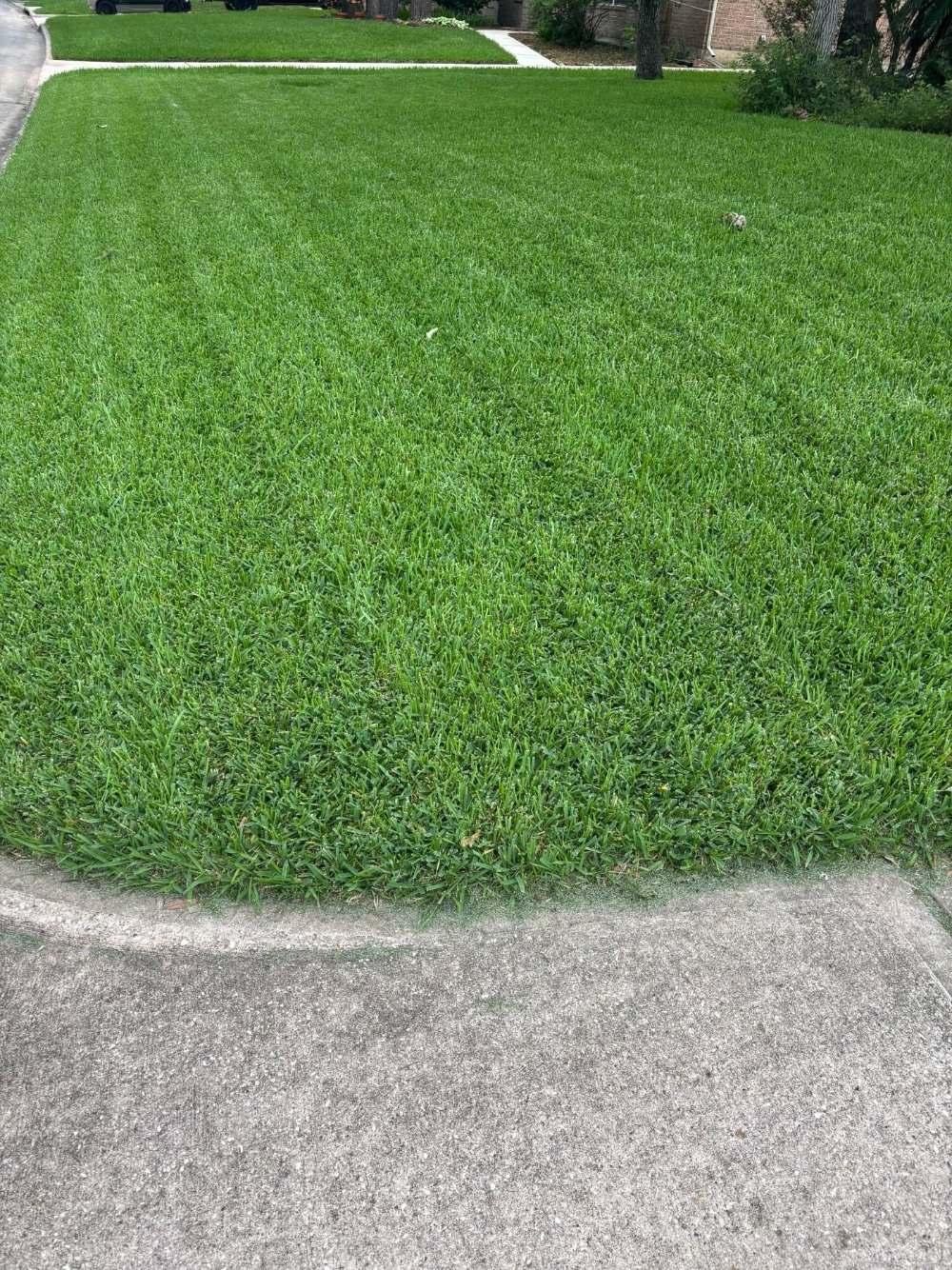
Drive through almost any neighborhood in Kingwood, Humble or Oak Forest and you’ll see it: St. Augustine that’s more lime than emerald, thin enough to see dirt between the blades, with patches that never quite fill in. Most homeowners assume the lawn needs more fertilizer. In our experience, the grass usually isn’t the problem at all. The soil underneath it is starving.
The Diagnosis: What Pale, Thin Grass Is Telling You
St. Augustine is a heavy feeder that spreads by above-ground runners called stolons. When it’s healthy, those runners knit together into a dense, springy canopy with a deep blue-green color. When it isn’t, the warning signs are easy to spot once you know what to look for:
- Pale or yellow-green color that comes back within weeks of every fertilizer application.
- Thin coverage where you can see soil between the blades, especially along beds, driveways and under trees.
- Bare or patchy spots that don’t fill in, even during the peak growing months.
- Short, shallow roots. Grab a handful of grass and pull. If it lifts easily with only an inch or two of root, the soil isn’t supporting deep growth.
- Weeds moving in wherever the canopy is thin, because sunlight is reaching the soil surface.
All of these point to the same root cause. The soil has lost the living biology and organic matter that turn nutrients into something grass can actually use. In Houston, where most yards sit on heavy gumbo clay or thin, sandy fill left by builders, that’s extremely common.
Why the Usual Fix Fades So Fast
Traditional lawn programs lean on synthetic, salt-based fertilizers. They’re cheap, fast and very good at one thing: forcing a quick flush of green. The nitrogen is already in a form the grass can grab immediately, so the lawn greens up within days.
The problem is what happens next. Much of that quick nitrogen washes past the roots with the next heavy Houston rain or sprinkler cycle. The salts left behind are hard on the microbes and earthworms that build healthy soil. And because the grass is being fed directly from a bag rather than from the soil, it never has a reason to push roots deeper. The color fades in a few weeks, the lawn looks hungry again, and the cycle repeats every time.
If your lawn looks great for two or three weeks after each treatment and then slides back to pale and thin, you’re seeing a synthetic green-up wear off. The lawn is being fed, but the soil isn’t.
The Fix: Feed the Soil, Not Just the Grass
Thrive’s approach starts underground. Instead of pushing a temporary surge of growth, we rebuild the soil’s ability to feed the lawn on its own, month after month. Two parts of our program do most of that work:
1. Proprietary carbon-based granulars
Our granular blends are built on carbon, the food source soil microbes run on. Feeding that biology helps it break down organic matter, hold moisture and release nutrients steadily at the root zone, instead of all at once. The result is even, lasting color rather than a spike followed by a crash. Our granulars are plastic-free, so there are no coated prills left behind in your soil. (Here’s why that matters.)
2. Organic liquid supplements
Each visit also includes liquid biological supplements that soak into the root zone and support the microbial life there. Together with the granulars, they help the soil hold water and air the way healthy soil should, and give St. Augustine roots the conditions to grow deeper.
What Healthy Soil Does for Your St. Augustine
Once the soil biology is fed consistently, the changes build on each other:
- Massive root systems. Roots follow air, water and food. As the soil opens up, roots push deeper, which helps the lawn handle heat and dry spells far better.
- Rich, lasting color. A steady supply of nutrients from active soil gives St. Augustine that deep green that doesn’t fade between visits.
- A thicker canopy. Well-fed runners spread and knit together, filling thin and patchy areas.
- Natural weed suppression. A dense canopy shades the soil surface, so most weed seeds never get the sunlight they need to sprout. Thick turf is the best weed defense there is.
This is also why we don’t rely on pre-emergents. A thick, healthy canopy does the job of choking out weeds naturally, without products that can stunt St. Augustine roots. Targeted spot care handles the few weeds that slip through.
What You Can Do Right Now
- Raise your mower to 3.5 to 4 inches. Taller blades shade the soil and support deeper roots. (More on that in our mowing guide.)
- Water deeply and less often rather than a little every day. Shallow, frequent watering trains shallow roots. Our watering guide covers the details.
- Leave the clippings on the lawn. They return organic matter to the soil.
- Stop chasing quick green-ups. Every round of salt-based fertilizer sets the soil biology back.
How Long Until You See a Difference
Soil improves on a curve. In the first couple of months, most of the change is happening underground. As the season goes on, most lawns begin to hold color longer between visits, thin areas start filling in, and fewer weeds show up. Because each month builds on the last, the lawn keeps getting thicker and greener the longer it stays on a steady soil-first program.
Get this done for your lawnSt. Augustine Lawn CareFrequently Asked Questions
Why is my St. Augustine grass pale even though I fertilize it?+
Pale St. Augustine that keeps fading after fertilizer is usually a soil problem. Salt-based synthetic fertilizers give a quick green-up, but much of the nitrogen washes away and the salts are hard on soil biology, so the color fades in a few weeks. Feeding the soil with carbon-based granulars and liquid organic supplements helps it release nutrients steadily, so color lasts.
How do I make my St. Augustine thicker?+
Feed the soil consistently, mow at 3.5 to 4 inches, and water deeply but less often. Healthy soil grows deeper roots and stronger runners, which spread and knit together into a dense canopy that fills thin and patchy areas over time.
Will a thicker lawn really reduce weeds?+
Yes. A dense St. Augustine canopy shades the soil surface, so most weed seeds never get the sunlight they need to sprout. That is why Thrive’s program relies on thick turf for weed suppression instead of pre-emergents that can stunt roots, with targeted spot care for anything that slips through.
See what your lawn really needs
Tell us about your yard and your local Thrive team will put together a free, no-pressure quote for an organic-first program built around your soil.
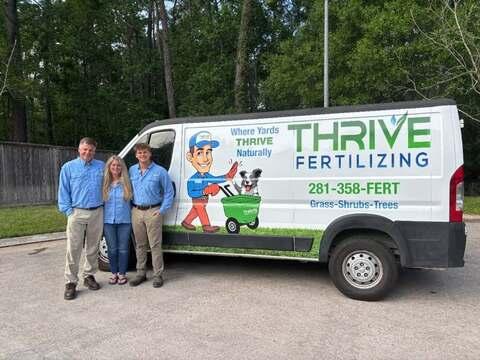
The Thrive Fertilizing Team is the family-owned crew behind Thrive, formerly Kingwood Fertilizing: Greg, Aimee and Jake Bennett and our local teams in Kingwood and Oak Forest. With 25+ years of Houston lawn care behind us, we write from what we see in real yards every week, from gumbo clay and sandy piney-woods soil to St. Augustine pushing through Texas heat.
Meet the team →