
Pick up a bag of premium synthetic fertilizer and look for the words “polymer-coated” or “controlled-release.” That coating — the technology that meters out nutrients over weeks — is a thin shell of plastic around every granule.
The Microplastic Problem
When the nutrients inside dissolve, the plastic shell stays in your soil. Season after season, application after application, those shells accumulate and slowly fragment into microplastics — in the ground where your kids play and your vegetables grow. A typical synthetic program can put pounds of plastic on a single lawn every year.
What Synthetics Do to Soil Life
- Salt-based formulas dehydrate and kill beneficial soil microbes
- Grass gets addicted to fast nitrogen instead of building roots
- Soil structure degrades, increasing runoff into bayous and storm drains
- The boom-bust growth cycle invites disease and thatch
How Organic Feeding Works
Organic fertilizers are food, not chemicals — they feed the microbial life that in turn feeds your grass, exactly the way nature builds a prairie. No plastic coatings, no salt burn, no “keep off the lawn” signs. The result comes a little slower and lasts a lot longer: real soil that produces real turf density year after year.
Since our start, Thrive customers have kept an estimated 315,000+ pounds of fertilizer plastics and synthetics off Houston-area lawns. Your yard can be part of that.
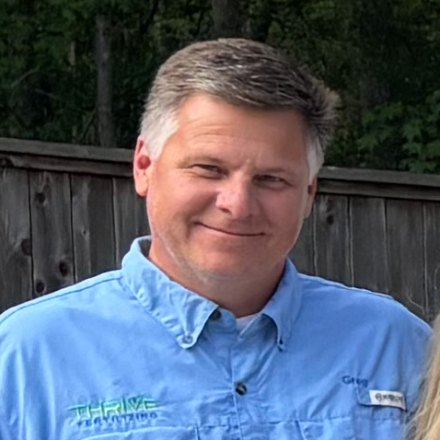
Greg spent 25+ years building a lawn care business with his dad and brother before starting Thrive with his wife Aimee and son Jake. He has been reading Houston soil — gumbo clay, sandy piney woods, and everything between — since the 1990s.
More about the Bennett family →Ready to transform your lawn? Call your local Thrive team or book a free assessment. We'll look at your specific yard and recommend the right program.