A mature shade tree can add tens of thousands of dollars to a property’s value — and take decades to replace. Yet most Houston trees live in compacted clay, squeezed by driveways and foundations, competing with turf for every nutrient. They survive. They rarely thrive.
Why Surface Fertilizing Doesn’t Reach Trees
A tree’s feeder roots live 4–12 inches down, spread far beyond the trunk. Granules spread on the lawn surface mostly feed the grass. Deep-root feeding injects organic nutrition directly into the root zone, where the tree can actually use it.
What Deep-Root Feeding Does
- Delivers organic nutrients straight to feeder roots
- Relieves compaction by creating air and water channels in the clay
- Strengthens trees against drought, storms, and pests
- Supports recovery in stressed or construction-damaged trees
Signs Your Trees Need Help
- Thinning canopy or smaller leaves than previous years
- Early leaf drop or fall color arriving in summer
- Dead branch tips in the upper crown
- Mushrooms or fungus at the base
If you’re seeing any of these, don’t wait — trees decline slowly and recover slowly. A deep-root program now beats an arborist’s removal bill later.
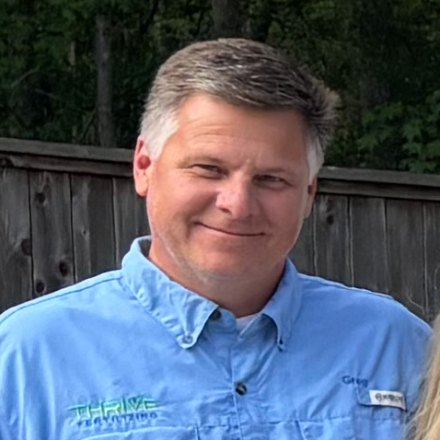
Greg spent 25+ years building a lawn care business with his dad and brother before starting Thrive with his wife Aimee and son Jake. He has been reading Houston soil — gumbo clay, sandy piney woods, and everything between — since the 1990s.
More about the Bennett family →Ready to transform your lawn? Call your local Thrive team or book a free assessment. We'll look at your specific yard and recommend the right program.