
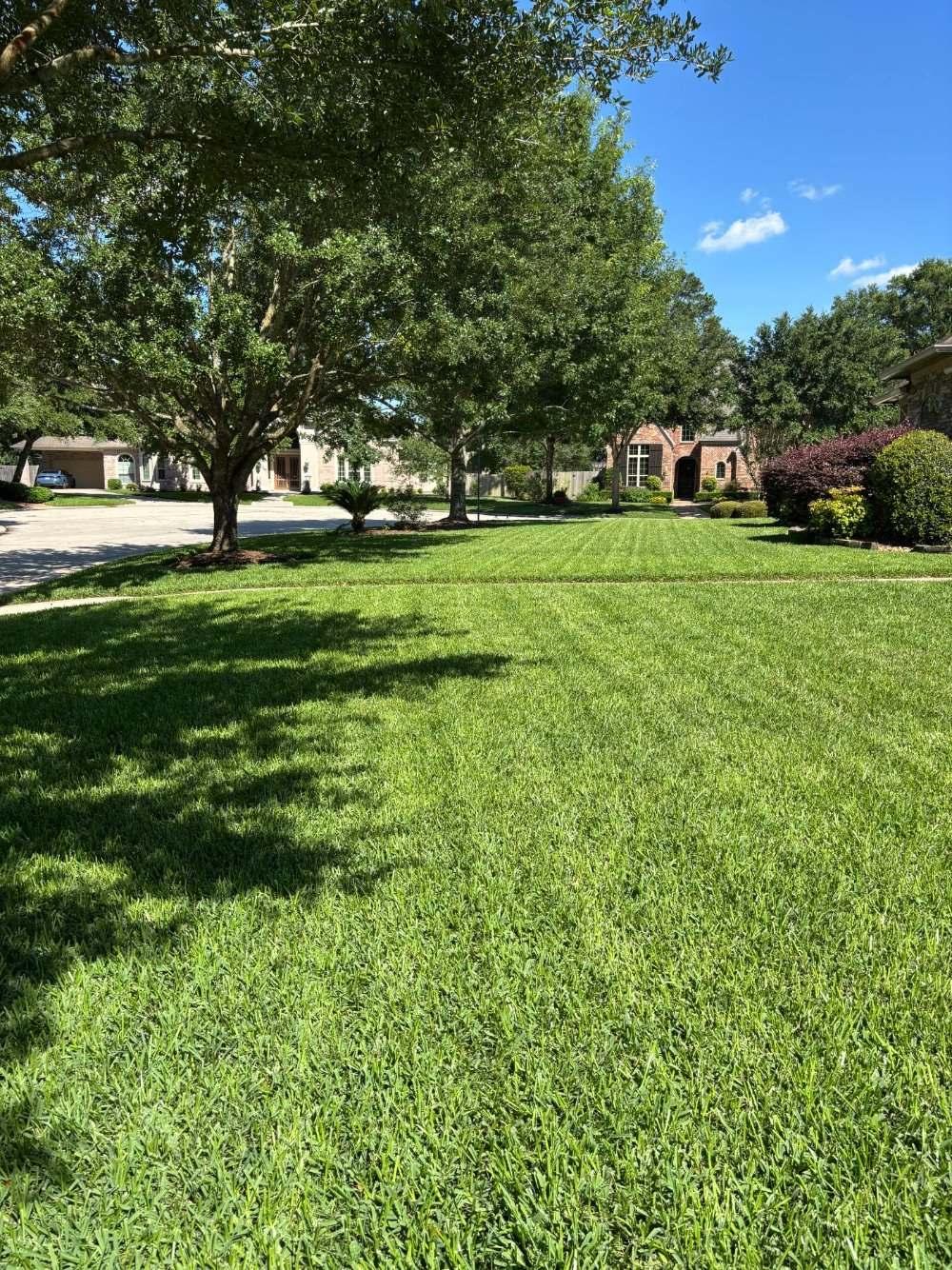
Fall Is Recovery Season
By the time October rolls around, most Houston lawns are worn out. Months of heat, long dry stretches and sudden downpours on clay soil take a toll, and St. Augustine spends much of the summer just hanging on. When temperatures finally ease, the grass gets a chance to catch up.
That’s why we call fall recovery season. Above ground, growth slows down. Below ground, the roots are busy. St. Augustine uses the cooler weeks to rebuild what summer heat took out, thickening its runners and storing energy in its roots. That stored energy is what powers green-up next spring, so a lawn that heads into winter with healthy soil and full reserves has a real head start when the weather warms.
Keep the Mower Up
It’s tempting to drop the mower deck for one last tidy cut before winter. Resist it. Scalping St. Augustine in the fall strips away the leaf blades the grass needs to make and store energy, and it leaves thin turf exposed to cold snaps and weeds.
Keep mowing at 3.5 to 4 inches for as long as the grass is growing, keep your blade sharp, and simply mow less often as growth slows. There’s no need to cut it short before winter. For more, see our guide to the best mowing height for St. Augustine.
Water Less, and Water Early
Cooler days and shorter afternoons mean your lawn uses far less water than it did in August. If your sprinkler is still on its summer schedule, it’s probably giving the lawn more than it needs. Cut back as temperatures drop and let rain do more of the work.
Timing matters as much as amount. Water early in the morning so the blades dry quickly once the sun comes up, and never water in the evening. Grass that stays wet all night in cool weather is exactly what brown patch is waiting for.
Brown Patch: Why It Shows Up in Fall
If rings or patches of tan, thinning St. Augustine appear in your yard this time of year, you’ve probably met brown patch. It tends to show up in low, wet areas once nights turn cool, and it’s one of the most common fall questions we get from Houston homeowners. It almost always comes back to moisture. The usual causes:
- Excess moisture. Irrigation that hasn’t been cut back for the cooler season.
- Poor drainage. Low spots and compacted clay where water sits after rain.
- Evening watering. Grass that stays wet overnight.
- Matted leaves or pine needles. A damp layer that holds moisture against the turf.
The good news is that homeowners can usually fix it without chemicals. Improve drainage where water collects, adjust your watering schedule, clear leaves and needles off the area, and let the spot dry out. Try not to walk or mow through wet patches, which can spread it around. Thrive guides our customers through this step by step, without chemicals, and we keep an eye on problem spots during every visit.
Don’t Let Leaves and Pine Needles Smother Your Lawn
Between the oaks and pines across Kingwood and Houston, fall can bury a yard fast. A thick layer of leaves or needles blocks sunlight, traps moisture and can smother the St. Augustine underneath. Rake them up, or mulch-mow them into small pieces that break down and return organic matter to the soil. A light layer of finely chopped leaves is fine. A matted blanket is not.
Winter Dormancy Is Still Work Time
When cold weather settles in, St. Augustine slows down and can lose some color. That’s normal dormancy, not a dead lawn. Dormant grass is more fragile, though, so limit foot traffic where you can, especially on frosty mornings.
Even while the grass rests, the soil doesn’t. Our soil-health work continues monthly through winter, below the surface, building the biology and structure your roots depend on. That steady off-season work sets your lawn up for a faster spring green-up.
Get this done for your lawnOrganic Lawn FertilizationWhy We Skip Synthetic Pre-Emergents and Salt-Based Fertilizers
Fall is when many lawn programs put down synthetic pre-emergents and salt-based fertilizers. We don’t. Salt-based products push quick top growth without doing much for the soil underneath, and we’d rather not add synthetic pre-emergents to soil we’re working to rebuild. Instead, we feed the soil itself with carbon-based soil nutrition and organic soil amendments blended in-house. A thick lawn growing in living soil is the best natural defense against weeds, and it keeps building on itself season after season.
Set Your Lawn Up for Spring
Fall and winter are the right time to start building next year’s lawn. Your first service is just $29.95 for lawns up to 5,000 sq ft, larger lawns get 50% off the first service, and there are no contracts. Pick your area below to get started.
Frequently Asked Questions
Should I feed my St. Augustine lawn in the fall in Houston?+
Fall is a great time to feed the soil, because St. Augustine is storing energy in its roots for winter. Thrive skips salt-based fertilizers and uses carbon-based soil nutrition that supports the soil and roots through the cooler months.
How do I get rid of brown patch without chemicals?+
Start with moisture. Cut back watering, water only early in the morning, clear leaves and pine needles off the area, improve drainage in low spots, and let the area dry out. Thrive guides customers through this without chemicals.
Is my St. Augustine dead or just dormant in winter?+
Usually it’s dormant. Tug gently on a handful of grass: dormant runners stay firmly rooted and pliable, often with some green near the base. Keep foot traffic light and it typically greens back up as spring warms.

Jake is the one actually on your lawn. He runs applications week to week across Kingwood, Humble and Atascocita, which means he sees how these programs perform season after season on the same yards — including yours.
More about the Bennett family →Ready to transform your lawn? Call your local Thrive team or book a free assessment. We'll look at your specific yard and recommend the right program.